Do your favorite pieces lose their magic once you hang them in your condo? In downtown West Palm Beach, the sun is bright, the views are stunning, and the wrong lighting can wash out color, add glare, and even speed fading. You want your art to look its best in daily life and in listing photos, without risking long-term damage. This guide shows you how to light art beautifully and safely in a coastal high-rise, with clear specs, condo-friendly fixtures, and HOA-smart steps. Let’s dive in.
Why art-ready lighting matters here
Downtown West Palm Beach condos often have large windows and strong natural light. That creates two challenges: glare and UV exposure. The right lighting plan reveals color and texture, keeps your collection safer, and elevates staging for showings and photos. In a market where presentation shapes perceived value, art-ready lighting can become a quiet advantage.
Color quality that flatters art
You want high color fidelity so reds, blues, and skin tones look true. Choose LED fixtures with a CRI of 90 or higher. This is a simple, reliable target for gallery-quality color at home. Advanced metrics like TM-30 exist, but CRI 90+ is a strong rule of thumb for most condo displays.
Choose the right color temperature
Pick a color temperature that fits your art and space:
- 2700 K: warm, classic feel. Nice for traditional oil paintings and cozy rooms.
- 3000 K: versatile and neutral. Works well for mixed collections and most interiors.
- 3500 K: crisp and modern. Great for contemporary pieces and photographs.
If you are lighting a varied collection in shared spaces, 3000 K is a balanced choice.
How bright should it be?
Art does not need harsh light to look great. Aim for modest, controlled levels:
- Works on paper and photographs: around 50 lux if preservation is a priority.
- Oil paintings and less light-sensitive materials: 100 to 200 lux is common.
- In many living rooms, 150 to 200 lux feels refined without overlighting.
Balance visibility with conservation. Dim to the low end for fragile pieces.
Control UV, heat, and Florida sun
UV and heat can fade and damage art over time. LEDs are ideal because they produce very low UV and little heat compared to halogen. Keep art out of direct sun whenever you can. In bright condos, consider UV-filtering film on windows or use protective glazing on sensitive works. These steps matter in South Florida’s year-round sun.
Aim light, avoid glare
Careful aiming makes a big difference. Use directional fixtures with adjustable beam angles so you light the art, not the entire wall. Narrow beams (about 15 to 30 degrees) suit small works. Wider beams (about 30 to 60 degrees) fit larger pieces or groupings. Angle lights to reduce reflections, and use anti-reflective or museum glass on framed works when needed.
Condo-friendly fixture options
Your building’s structure and rules shape what you can install. Many high-rises use concrete ceilings and walls, which affects wiring and mounting. Here are practical options that work well in downtown towers.
LED track lighting
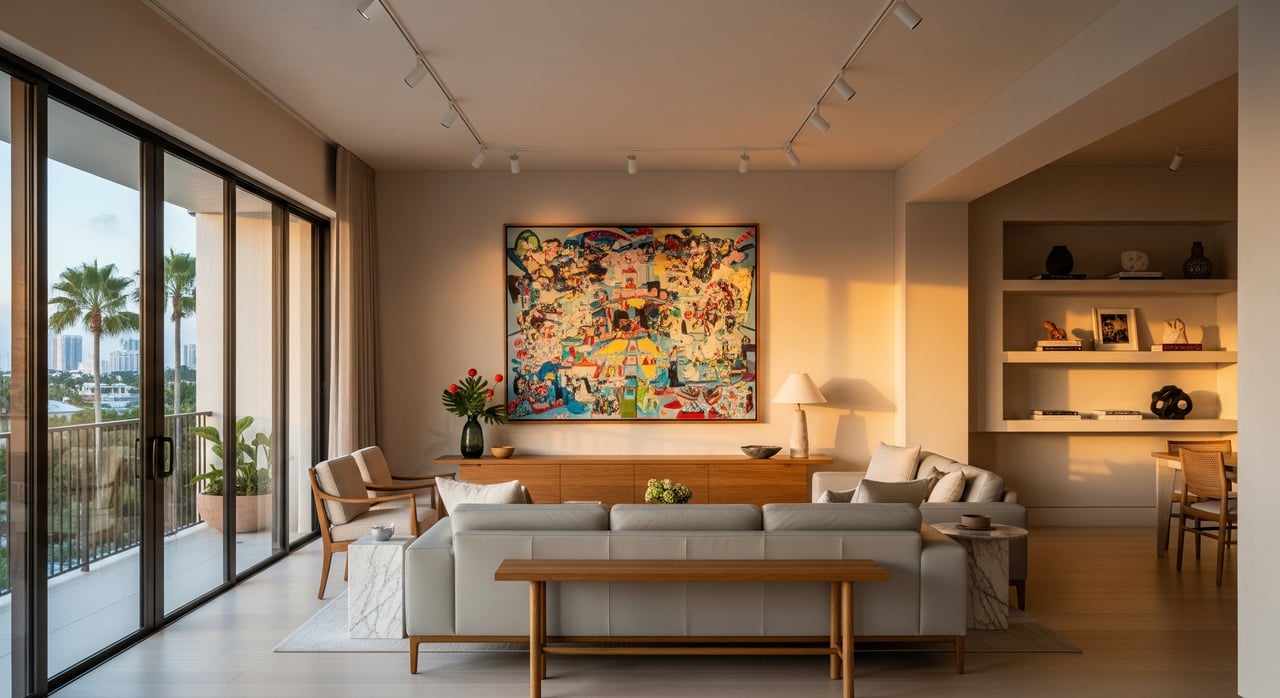
Track lighting is flexible and widely used in galleries. You can mount it on ceilings or walls and reposition heads as your collection changes. Choose high-CRI LED heads, dimmable drivers, and adjustable beams. Track is a strong fit for open-plan condos and long gallery walls.
Recessed adjustable gimbals
If your ceiling allows it, low-profile recessed gimbals give a clean look with precise aiming. These usually require a licensed electrician and may need HOA approval. They feel seamless in modern condos and keep sightlines clear.
Dedicated picture lights
Sleek LED picture lights place light right where you want it. They work well for single statement pieces, especially above consoles and in entry niches. Look for high CRI, good heat management, and dimming. This is a focused, elegant solution.
Rail or monorail systems
Low-voltage rail systems with integrated LED heads offer gallery-grade control. They can be surface-mounted and tailored to your layout. These are more of an investment and often require professional installation.
Rental-friendly and low-impact options
If drilling is limited, try portable LED art lights or floor lamps with directional heads. Adhesive hanging strips can help with light pieces, but avoid using them for heavy or valuable works. Some tensioned systems that brace between floor and ceiling may work in certain units. Always check your building’s rules first.
Approvals, wiring, and safety
Condo associations in Florida operate under the Florida Condominium Act (Chapter 718). Many buildings require approval for electrical changes, drilling into slabs, or alterations that affect visible elements. Before you install track, add circuits, or penetrate concrete, review your Declaration and Rules, then speak with your manager or HOA committee.
- Work with a licensed Florida electrician for any hardwiring, slab drilling, or new circuits. Permits from the City of West Palm Beach or Palm Beach County may be required.
- Replacing an existing light is often straightforward. Adding new wiring is more involved and should be planned with your building team.
- Use LED-compatible dimmers. Confirm compatibility with the specific fixture drivers.
- If you adopt smart controls, set up a consistent “gallery mode” scene for showings.
Smart controls that serve the art
Smart LED fixtures or retrofit bulbs can create repeatable scenes. Use one color temperature throughout the view. Set a gentle dim level for evenings, and a brighter scene for daytime when blinds are closed. Always confirm that your smart controls play well with your drivers and dimmers.
Staging and photography tips
Fine lighting makes your art a focal point in both walk-throughs and photos.
- Hang at eye height. A common starting point is 57 to 60 inches from the floor to the center of the piece.
- Keep groupings even. Use consistent beam angles and dim levels so a gallery wall reads as one composition.
- Paint with purpose. Neutral walls, like soft white or greige, help colors read true and photograph cleanly.
- Avoid mixed color temperatures. During photography, close blinds if needed and rely on a consistent artificial light at around 3000 K.
Conservation basics for coastal condos
- Keep light-sensitive works away from direct sun. Use UV film on windows where exposure is unavoidable.
- Manage humidity when possible for paper works and wooden frames.
- Choose corrosion-resistant finishes for fixtures and metal frames in coastal environments.
- Review your insurance. For valuable pieces, consider coverage specific to fine art.
Budget paths that make sense
You can scale your plan to your goals and timeline:
- Low cost: portable LED art lights, smart bulbs, and directional floor lamps. Minimal install.
- Mid-range: surface-mounted track, several LED picture lights, and professional hanging rails. Moderate install.
- High-end: recessed adjustable gimbals, gallery-grade track with high-CRI fixtures, and curated rail systems. Professional design and installation recommended.
Always get quotes from licensed pros for wiring or slab work.
Quick action checklist
- Check your condo documents and ask your HOA or manager about required approvals for drilling and electrical work.
- Assess each piece. Paper, textiles, and photographs need lower light levels than many oils.
- Choose LEDs with CRI 90 or higher and about 3000 K for most spaces, and verify dimmer compatibility.
- Keep art out of direct sun. Add UV film or protective glazing where needed.
- Hire a licensed electrician for any hardwired track or recessed installs and secure permits if required.
- Review insurance and consider fine-art riders for high-value works.
- For photos and showings, unify color temperature and reduce window glare.
When to bring in experts
A lighting designer or gallery installer can help if you have a large collection or tricky sightlines. A licensed Florida electrician is essential for condo wiring and slab penetrations. For fragile or valuable pieces, consult an art conservator. Local museums and galleries, like those you visit around West Palm Beach, are helpful for visual reference and best practices.
Elevate your condo’s story
Art-ready lighting does more than show off a piece. It sets a mood, protects your collection, and strengthens your home’s market narrative. In a downtown tower where sun, views, and concrete ceilings create unique conditions, a thoughtful plan pays off in everyday enjoyment and in resale. If you are preparing to list or want your new purchase to feel turnkey, we can help you create a gallery-caliber presentation that fits your building and lifestyle.
Ready to curate a home that lives like a private gallery on the water? Connect with Haven Palm Beach to explore design-led staging, waterfront loft opportunities, and a refined, art-ready approach to selling or buying.
FAQs
What specs should I look for in art lighting for a West Palm Beach condo?
- Choose LED fixtures with CRI 90 or higher and a color temperature between 2700 and 3500 K, with 3000 K as a versatile default for mixed collections.
How bright should I light oil paintings versus photographs at home?
- Oil paintings and many canvases look great around 100 to 200 lux, while works on paper and photographs do better at lower levels, around 50 lux when preservation matters.
How do I protect art from intense Florida sun in a high-rise with big windows?
- Keep pieces out of direct sun, add UV-filtering window film or protective glazing, and use LED lighting to minimize UV and heat exposure.
Do I need HOA approval to add track or recessed lighting in a downtown condo?
- Many associations require approval for electrical work or slab penetrations, and permits may be needed, so review your condo documents and consult a licensed Florida electrician.
What lighting options work if I rent or cannot drill into concrete?
- Try portable LED art lights or floor lamps with directional heads, and use surface-mounted rails or tensioned systems only if allowed by your building rules.
How can I avoid glare on glass-framed art in bright rooms?
- Angle directional fixtures to minimize reflections, use wider beams for even coverage, and consider anti-reflective or museum glass for framed works.